Thursday, 7 September 2017

The Woes Of PC Repairs

Computers make our lives easier and at the same time more difficult too. We love the ease and convenience these tech gadgets give us especially now that the world has become more closely inter-connected through the web. However, all hell breaks lose once your computer starts to act up and you don’t know what to do about it. Repairs cost money and it is not always cheap to get your device fixed. For individuals who do not have prior knowledge regarding computers, it is even more stressful and confusing because you do not know where to start.
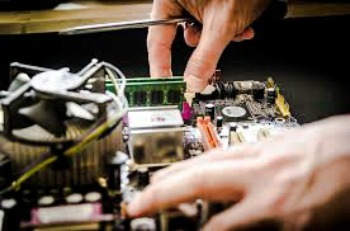
There is even the possibility of you getting ripped off of your hard-earned money by scammers while you are still stuck with a broken computer that does not work. Sometimes in our rush to get things fixed right away, we make more mistakes that aren’t just costly but may even be the reason why PC repair no longer becomes an option for you as it can’t be salvaged anymore.

Troubleshooting computers is sometimes a difficult task.

"It doesn't work..." isn't the best description to allow a technician to fix the problem.

"It doesn't boot..." indicates that the computer won't start. This could mean that nothing happens when you push the power button. It could also be caused by a corrupted operating system. The computer isn't able to read the hard drive. The computer "lights up" but it never gives you a login prompt.

Once the computer displays a normal desktop, the computer has done a lot of work. It has verified the hardware and loaded the operating system. At this point, the user may be considering getting online. If you are able to start the browser -- Internet Explorer, Firefox or Google Chrome -- the next task is to attempt to connect to a website. A failure in the browser indicates that there is no network connection available.

Many times the Internet Service Provider (ISP) reconfigures its network. You need to reboot the modem device. Unplug the router or turn it off for a few seconds. When the modem powers up again, it should load the proper configuration. Ask your ISP for the proper LED display when the modem is functioning normally. There is no need to unplug all the wiring if everything worked properly and none of the wiring has been modified.

(Via: http://www.lowellsun.com/business/ci_31133772/relax-and-make-smart-plans-fix-your-pc)

When it comes to computer repairs, you would really require the technical assistance of a computer expert or a technician to ensure all your data stays safe as they try to fix the problem with your computer. The complex codes and various interconnected (and often sensitive) parts inside your PC make it doubly more challenging to get these devices working once more. And as such, their highly-skilled services come at a price we are not always ready to pay for.

Even as machines and devices have become less mechanical and more electronic, we have found that customers still expect to be able to repair and continue using electronic products they purchase. When manufacturers support that expectation, by offering repair manuals, spare parts and other guidance on how to fix their products, they build customer loyalty.

Specifically, we found that customers are more likely to buy additional products from that manufacturer, and are more likely to recommend that manufacturer’s product to friends. The math here is simple: More customers using a company’s products, whether brand-new or still kicking after many years, equals more money for the business.

Our research also shows that the failure of most electronic devices is due to simple accidents such as dropping a device or spilling water on it. The most common problem is a broken screen. There are other issues, too – such as batteries that no longer hold their charges or circuit boards that just stop working.

(Via: https://theconversation.com/why-cant-we-fix-our-own-electronic-devices-77601)

Not all consumers want the experts to fix or maintain their gadgets especially if money is tight. Some of them would love to do all the work if they can find step-by-step manuals or tutorials on how things should be done and not have to pay for somebody else to simply change some damaged parts on their gadgets or other mundane things related to your device. Aside from helping computer users and owners save money and get their devices fixed and looking and working brand new once more, we also cut down on e-waste and save the environment in the process without compromising the comfort and convenience offered by your average working computer.

The Woes Of PC Repairs was first published to The Church Report Blog


source https://www.thechurchreport.com/the-woes-of-pc-repairs/

Wednesday, 30 August 2017

Landscaping Opportunities For Those Born With A Green Thumb

Not everyone is gifted with a green thumb. Some have tried effortlessly in planting a single plant or flower but to no avail. They most likely wither before it even grows an inch from the ground. But with the rapid urbanization and the construction of numerous skyscrapers here and there, there is little space left for landscaping or gardening. Then, there is pollution makes it harder for us to stay healthy as we are exposed to all sorts of it in our daily lives. Hence developers and builders now try to incorporate green spaces in tiny pockets of land in various parts of the city to make it greener and more livable aside from possibly reducing our carbon footprint.

It is why landscaping jobs are increasing and companies need more people to fill in jobs that require actual work on plants and green spaces to maintain a clean and lush look all year round. Aside from prior knowledge and skills on landscaping, a passion for plants and in beautifying spaces is also a must or else you’d find the job too exhausting and laborious aside from taking up too much of your time. It is the reason why only a few take up the challenge of doing something like this for a living because it can be really hard work at times.

Jobs are plentiful on Hilton Head Island, the problem is finding people to fill them.

For businesses like The Greenery, costs are growing like the weeds they cut down every day.

The landscaping company employs 650 people, and covers hundreds of acres in Savannah, Bluffton and Hilton Head.

But as the work has gotten bigger for the Greenery, their workforce is getting smaller.

“We used to have when you got into work 2-3 guys waiting outside looking for a job. explains Lee Edwards. “The next day if you didnt have one they would be out there again. Those days are long gone.”

(Via: http://wsav.com/2017/08/08/landscaping-business-is-booming-but-costs-rise-as-workers-disappear/)

It is not a glamorous job but it pays the bills and feeds the family too. It is also clean money and a decent job any average Joe can be proud of. If you are someone who doesn't mind doing the dirty work and likes making the planet a greener and more beautiful place to live in, then a landscaping job is right for you. And you should not feel threatened of any work stability issues as there will always be a demand for professional landscaping services in various parts of the country.

  1. Diversify Your Offerings

Just because there’s a time that’s slower for your industry doesn’t mean it needs to be a slow time for you. Think about how you can expand your business to increase the scope of what you do and generate income during those sluggish months.

If you own a landscaping business, consider offering snow plowing services during the winter. Your expansion should be something logical that’s easy to manage with your existing resources and is a good or service that your current customer base will want to take advantage of; you don’t want to expand in a way that diverts your efforts and resources from your original business idea.

(Via: http://www.business2community.com/consumer-marketing/6-ways-leverage-seasonality-advantage-01893969#Yg7CpYctRUF1tmJo.97)

Perhaps the issue with landscaping is that work may be limited because of the changing of the seasons. But don’t let that dampen your spirits as there are plenty of ways you can make up for lost revenue by diversifying the services you offer such as tree clearing during autumn and even dabble into snow plowing during winter. With the help of technology and the Internet, you can learn new ideas on what can possibly work for your landscaping business in your area because for sure somebody else has already tried it too. You not only make money by landscaping other people’s lawns but you likewise make a positive change in this world that is badly needed at a time right now when climate change is at work and wreaking havoc on everyone’s lives.

The blog article Landscaping Opportunities For Those Born With A Green Thumb Read more on: TCR Blog


source https://www.thechurchreport.com/landscaping-opportunities-for-those-born-with-a-green-thumb/

Wednesday, 23 August 2017

Common Constraints To Volunteerism

The world isn’t always a nice place to live in but we can’t deny it is the only habitable planet in the universe where mankind can basically survive. Simply living isn’t an easy task anymore because many actually can’t afford a place of their own and essentially live in the street and rely on the generosity of others to sustain their needs. It’s the harsh reality of life but millions are living as homeless in various parts of the globe and it keeps on growing as the requirements for daily living isn’t that easy anymore.

While those living in poverty continue to grow, what can the rest of the world do to uplift their lives and brighten up their days even just once? The answer lies with volunteerism. People who are generous with their time and money enjoy supporting and volunteering in civic groups and NGOs that directly work with the poor and the homeless and those who deserve to receive help from the affluent. Unfortunately, not all the time these people are always rich and they do lead normal lives, which means they also have jobs that need their time and attention.

More than half of people who do not volunteer say that work commitments are the main reason they have never helped a charity, according to data from the Department for Digital, Culture, Media & Sport.

Further information released this week from last month’s Community Life Survey 2016/17 reveals that 52 per cent of people who had never formally volunteered said work commitments prevented them from doing so.

The Community Life Survey is an annual survey of adults aged 16 or over about their levels of community cohesion and engagement.

This year’s survey found that the proportion of people who said they volunteered fell over the past three years.

(Via: http://www.thirdsector.co.uk/work-commitments-main-barrier-volunteering-survey-finds/volunteering/article/1441752)

The number of people that volunteer in good causes has dropped because aside from work and family obligations, they have multiple preoccupations now that mostly involve technology. A lot of adults and teens spend a great deal of their time daily surfing their news feed and updating their social media accounts that they have little time left to spare for other causes like volunteerism and charity.

Ronald Lovell heard about the number of people in Shasta County failing to answer their summons for jury duty.

Frustrated that this is so common, he decided to volunteer his service.

"Someone who's committed a heinous crime walking free simply because people didn't show up for jury duty, that's not acceptable," Lovell said. "You're turning this person loose to do this again and you're making a mockery of the justice system."

He wanted people to think about if it were their family member that was targeted by the criminal that was then set free because of a dismissal. 

Lovell said jury duty is "the last real grip where we're effective in what takes place in our government."

(Via: http://www.krcrtv.com/news/local/shasta/man-volunteers-for-jury-duty-upset-by-number-of-no-shows/602417072)

More people even avoid doing common voluntary activities like jury duties. They come up with all sorts of excuses even if they were already summoned by the court. Now, what more on other voluntary civic causes that they aren’t exactly required to participate in? Most people would rather stay at home and surf the web to their heart’s content or hang out with their friends. Those who are already into volunteerism are continually trying to raise awareness on the impact of volunteer work to society especially in the lives of the less fortunate.

The government can’t always address all the issues happening around us 24/7. At times, we have to pitch in and do our part in making a positive difference to society and not just complain all the time about the state’s inefficiencies. You’d be surprised at how volunteering a few hours of your time can uplift a person’s life or even an entire community. That’s the power of extending a helping hand – random acts of kindness that perpetuate the goodness in humanity over and over again.

Common Constraints To Volunteerism See more on: thechurchreport.com


source https://www.thechurchreport.com/common-constraints-to-volunteerism/

Wednesday, 16 August 2017

How Religion Sparks Terrorism

People are both sensitive and passionate about their faith. And the most apparent way of professing your faith is through your religion. Various organized religions abound the world today. Even in ancient times, people have professed different faiths and fought for it to the ends, especially when their religion or faith is threatened. And nothing much has changed if you look at how things are lately. Even though technology has taken over the world and we can say we are centuries ahead of the barbaric ways of our ancestors, religious terrorism remains to be an existing threat that we all face.

The rise of nationalism sparked religious terrorism and terrorist activities motivated by religion have risen significantly since the 1980s. Even during biblical times, violence and religion had a symbiotic relationship. Terrifying acts motivated by religion, justified by religious beliefs, or influenced by religious organizations is the very essence of religious terrorism. Today, current geopolitics forces are likewise closely linked with acts of religious terrorism.

Two horrific suicide bombings, in two different cities, two hours apart—this is how Egyptian Christians began Holy Week. 

In the cities of Tawra and Alexandria, Muslim terrorists stormed Coptic churches where they proceeded to blow themselves to a fine pink mist while taking 44 worshippers with them. These two attacks followed last December’s horrific suicide bombing at St. Peter’s Cathedral in Cairo that killed 29. 

Does Egypt have a problem with Islamic violence? Not according to Egypt’s most prominent clergyman, Dr. Ahmed al-Tayeb, who holds the prestigious title of Grand Imam of al-Azhar. At a conference in Cairo last month, al-Tayeb said that the incidence of Muslim violence around the world is rather unremarkable: “There is an obvious double standard in the world’s judgment of Islam on the one hand, and [its judgment of] Christianity and Judaism on the other, despite the fact that all are guilty of one and the same thing, that is, religious violence and terrorism.” 

The point al-Tayeb is trying to make is pretty straightforward: that people are quick to chide Muslims for terrorism when in fact the terror problem cuts across religious lines. Clearly all of this talk about terrorism must be a cloak for bigotry. If people were truly concerned with eradicating terrorism they would condemn it wherever it’s found. The fact that they don’t exposes their hypocrisy. 

(Via: http://www.frontpagemag.com/fpm/266436/if-terror-knows-no-religion-where-all-benny-huang)

Throughout history, revolutionary groups or terrorists with religious and political motivations perform various acts of martyrdom, self-sacrifice and suicide terrorism to trigger panic or mass hysteria and destabilize the government or sow seeds of fear in society and the people. Terrorist suicide attacks are inexpensive yet efficient ways of causing damage and sending the message aside from being highly difficult to counter.

US President Donald Trump has said that terrorism is one of the gravest threats to religious freedom around the world and hoped for a “better tomorrow” when people of all faiths, including Hindus, can worship according to their conscience.

In his weekly radio and web address, he said the US has cherished the freedom of worship “from the very beginning”.

“That is the promise the first settlers saw in our vast continent — and it is the promise that our bravest warriors have protected for all of our citizens in centuries since, a long time ago,” he said on Friday.

“Sadly, many around the globe do not enjoy this freedom — and one of the gravest threats to religious freedom remains the threat of terror,” he said.

On Palm Sunday, as Christians around the world celebrated the beginning of the Holy Week, IS killed 45 people and injured over 100 at two Christian churches in Egypt, he said.

“We condemn this barbaric attack. We mourn for those who lost loved ones. And we pray for the strength and wisdom to achieve a better tomorrow — one where good people of all faiths, Christians and Muslims and Jewish and Hindu, can follow their hearts and worship according to their conscience,” Mr. Trump said.

(Via: http://www.thehindu.com/news/international/terrorism-one-of-gravest-threats-to-religious-freedom-trump/article18044812.ece)

One of the reasons why Donald Trump ran for office is because he is worried about the state of the nation and the constant terrorist threats all Americans have to deal with for a while now. He felt that the previous administrations weren’t doing enough measures to prevent these terrorists from gaining access into the country and endangering the lives of millions of Americans.

His campaign of making America great again aims to address the issues of religious terrorism among others; something that he felt weren’t given enough focus in the past. He is a true patriot by heart and only does the things that he feels is for the good of America regardless of what the outsiders may say. And for him, religious terrorism is a threat that he doesn’t take lightly because he’ll never risk the safety and security of every American, regardless if they voted for him or not.

The following blog article How Religion Sparks Terrorism Read more on: TCR Blog


source https://www.thechurchreport.com/how-religion-sparks-terrorism/

Monday, 7 August 2017

Africans Deprived Of The Chance To Learn

Education is the key to the good life. It’s common knowledge that educated people have better chances in life. They can land better jobs than those without bachelor degrees and can definitely go up the corporate ladder. And since quality education opens doors to various opportunities, parents do their best to send their kids to good schools for their brighter future.

Our cognitive superiority as humans is what separates us from all the other species on earth. However, not everyone is given the chance to better themselves because you need to invest a lot of money before you can get that coveted college diploma that will be your ticket to living a stable and comfortable life. Not everyone gets the chance to study in struggling third-world countries. How can they pay for expensive tuition fees when they can barely afford basic life necessities like food, shelter, and clothing? Even the government can’t afford to subsidize the youth’s education, making it hard for the poor to uplift their lives.

The Global Education Monitoring Report notes that donor countries are placing a lower priority on education aid, creating an annual $39 billion financing gap between 2015 and 2030. As allocations for health and humanitarian relief increased globally due to the refugee and migration crisis in Europe, aid to education stood at $12 billion in 2015, 4% below the 2010 levels.

This shortfall is specifically affecting countries most in need—worsening the prospects for achieving global education goals. The situation is especially critical in sub-Saharan Africa, where the countries most in need are located, and which also has over half of the world’s out-of-school children.

(Via: https://qz.com/1003800/unesco-says-education-funding-stagnates-as-us-uk-and-others-place-lower-priority-on-aid/)

Africa is a rich country in terms of natural resources but is one of the poorest places on earth. It’s quite an irony, right. When you hear the word, Africa, you often think of famine, poverty, and conflicts. Even the wilderness is fast disappearing because the Africans aren’t educated enough to protect their natural resources and they can’t count on a corrupt government to fight for their rights.

In the next two decades, Africa must become capable of negotiating a global economy increasingly driven by technological advances and new trading relationships. Much of Africa’s economic performance flows from resource-rich industries that are hardly models of sustainability. Rather than relying on its natural resources, Africa must accept that the most important factor in its future success – as it is for all economies, developed or not – is education.

Education is now the best predictor of wealth creation worldwide, and in the coming decades that pattern will only intensify, as economic productivity becomes increasingly focused on innovation, technology, specialisation, and creativity. Many types of jobs will also be automated in the coming years, and this will change Africa’s labour market – partly because many industrial jobs in Africa consist of tasks that could in theory be replicated by new technologies. Countries must think about creating or promoting sectors with jobs that are high in ‘soft-skills’ and creativity if they want to be competitive globally in the decades to come. Without investment in educational standards, Africa will be left behind.

That would be a tragedy for the continent’s greatest resource – its young people. 

(Via: https://www.dailytrust.com.ng/news/opinion/without-education-revolution-africa-s-economic-green-shoots-will-wither/199261.html)

The only disadvantage of Africans is that they lack the resource to produce globally competitive citizens. The African youth are not oblivious of all the technological advancements that their foreign counterparts get to take for granted. With the right tools, they can change the image of their continent and gradually address the chronic issues that are crippling their society and lives.

Most African families can barely eat, so sending kids to school is quite impossible given their current situation. Aside from the basic necessities, it is the one thing they need the most. If only their resources are managed right and they don’t get looted by corrupt officials and other countries of the richness of their land, educating the African youth won’t be a problem at all. Only then can they truly change African life for the better.

Africans Deprived Of The Chance To Learn is republished from https://www.thechurchreport.com


source https://www.thechurchreport.com/africans-deprived-of-the-chance-to-learn/

Thursday, 13 July 2017

HIV/ AIDS: The Silent Epidemic

For anyone who is sexually active or in their child-bearing years, the threat of getting HIV or AIDS is a scary thought. Back in the days, only a small fraction of the population gets infected but nowadays both heterosexual and homosexual relationships are at risk. Our modern lifestyle of casual hook-ups and one-night stands are contributing factors to this rising phenomenon. Even the use of illicit drugs like heroin is a culprit why people get it even though they practice safe sex.

HIV is the acronym for Human Immunodeficiency Virus. When an individual’s immune system severely weakens and is characterized by a CD4 count that is below 200, a person is then diagnosed with AIDS or Acquired Immune Deficiency Syndrome. It is known as the last stage of an HIV infection or an advanced HIV infection. This viral infection is unlike common viral infections like the common cold which is self-limiting. HIV is a lifelong infection leaving an individual HIV positive for life. The virus attacks the body’s immune system and destroys WBCs or white blood cells, so the body is unable to protect itself from invading pathogens or illness.

The population of people who are living with HIV and AIDS is ageing fast. This reflects the ‘good news’ story of the effectiveness of anti-retroviral drugs that have meant that many people with HIV now have a near-normal life expectancy. However, part of this growth is also new infections in the older age group, accounting for 17 per cent of all new HIV diagnoses in 2015 in the US. The trend is seen most clearly in developed countries, where people have better access to high quality health care, but is also replicated around the world. Over 30 million people in Sub Saharan Africa are now living with HIV and 10 per cent of them are over 50. Around half of the people living with HIV in the US are over the age of 50 and that number is set to rise.

Short of someone finding a cure for HIV, we now have to face the issue of how we are going to provide them with the right care and support in the decades to come. This is both a challenge and an opportunity. We need to ensure that the health services are tailored to the different needs of people who are entering retirement and may have other issues to deal with including co-morbities that come with age, and social isolation.

(Via: https://www.hippocraticpost.com/ageing/ageing-with-hiv/)

While we often associate HIV infections with younger people who have higher libidos, multiple sexual partners, and rampant drug abuse, a big number of the older population also suffer from the condition and live with it until their death. They also have to deal with the stigma of being diagnosed with such an infection.

Shortly after the 2017 presidential inauguration, the web page for the Office of National AIDS Policy was removed, and terms such as “LGBT,” “Lesbian,” “Gay,” “Bisexual” and “Transgender” were stripped from the new White House website. A few weeks later, the Trump administration lifted federal guidelines that said transgender students should be allowed to use public school bathrooms and locker rooms matching their chosen gender identity. There is still no mention of HIV and AIDS in President Trump’s health care policy. Now the Republican-led U.S. House of Representatives is attempting to fast-track its Obamacare replacement plan. And we have every reason to be frightened and angered by the proposed plan and its potential outcomes.

According to the Department of Health and Human Services, before the Affordable Care Act was passed, 24 percent of people with HIV had no health insurance coverage at all. There are 1.2 million people in the U.S. already living with HIV. Health insurance is vital to keeping viral suppression rates up and infection rates down. The ACA provided critical subsidies for private insurance and expanded Medicaid in 31 states and the District of Columbia, which increased access to medical treatment. It also guaranteed coverage for people with preexisting conditions such as HIV and covered HIV testing. Finally, by funding prevention efforts of HIV and AIDS service organizations, the ACA was playing a big role in keeping the virus from being transmitted to our most vulnerable communities — transgender women of color, and young men of color who have sex with men.

The Trump administration should look into all possible repercussions of the Obamacare repeal so they can also prepare for a new health care policy that addresses these issues and ensure a smooth transition. If not, not only will more people get sick but mortality rates on deadly and communicable conditions like HIV and AIDS will likely go up and have a negative impact on society.

Make no mistake — gutting the Affordable Care Act will have widespread impacts that stretch beyond HIV and AIDS. The repeal and replacement would cause 24 million people to lose health insurance within a decade, according to the nonpartisan Congressional Budget Office. And a report from the Children’s Defense Fund found that more than two million children in New York alone are now at risk of losing coverage or benefits once ACA is repealed.

We must think back to the 1980s, when HIV and AIDS were on the rise and we were losing our friends and loved ones at alarming rates. Over three decades later, and our nation is at a perilous crossroads. If we move forward with a health care plan that causes millions of Americans to lose insurance and doesn’t prioritize HIV and AIDS testing and funding, we could see one of the deadliest epidemics of all time resurface. I urge members of Congress not to make this mistake — do not pass the Trump administration’s replacement plan for the Affordable Care Act.

(Via: http://www.advocate.com/commentary/2017/3/20/trumpcare-could-bring-hiv-roaring-back)

Many were disappointed and upset at the various budget cuts imposed by the Trump administration. He considered the education department, arts, and healthcare, for instance, to be irrelevant to nation-building and rebuilding the greatness that is America, thus cutting back on budget and putting their programs on the sidelines. While many of us think of these things as a major inconvenience and utter insensitivity on the part of Donald Trump, it can actually have more serious complications especially on the field of healthcare.

President Trump still pursues the repeal of Obamacare. And if he does, the abolishment of the Affordable Health Care Act can result to a rise in HIV cases in the country that was put at bay by Obamacare as they offered health insurance coverage to roughly 24% of HIV-infected Americans. By ensuring these patients have access to health care and medicines that not only offer palliative relief in suppressing symptoms but likewise reduce the infection rate of this virus. Without a national health care policy that addresses this issue, we may once again witness a rise in patients diagnosed with HIV or AIDS especially that most younger people don’t have second thoughts in having casual sex with a total stranger or indulge in unspeakable sex acts that are far from safe.

Aside from that, these patients will once again be subject to the phobia and stigma associated with the condition and will probably be worsened by cyberbullying on social media and other social channels. We not only want to prevent deadly conditions from spreading but more so we want to promote the health of every American regardless of their status in life.

HIV/ AIDS: The Silent Epidemic was first published to The Church Report


source https://www.thechurchreport.com/hiv-aids-the-silent-epidemic/

Friday, 9 June 2017

Can Medicine Benefit From Social Media?

If there’s one thing we love the most that technology has given us, it is the debut of the Internet and everything else that comes with it especially social media. Imagine how social media has changed the lives of virtually everyone on the planet. It’s not just used for leisure but even for work and business too. People can spend hours on the web browsing through their various social media accounts and never feel bored at all. Access to the Internet is no longer a luxury but a basic human need that should be met without much of a struggle.

Social media got everything covered. Whatever your field, profession or interests may be, you are sure to find a page where you can feel at home and connect with like-minded individuals. The use of social media is not just about maintaining existing relationships with previous and current offline contacts but even in making new contacts from complete strangers you meet online.

Just as Snapchat and Instagram and YouTube have influencers, so too does medicine. Chronic diseases occupy an online world of memes, hashtags (#hospitalglam), and people who provide information and insights to communities that too often feel they have no voice. A growing number of companies are hiring these patient influencers to reach, and understand, these folks. And, of course, sell them stuff.

Last month, the Boston company Wego Health launched a web-based platform that introduces pharmaceutical firms, medical device manufacturers, hospitals, and insurers to people like Ingles. Those firms, in turn, pay influencers for access to their experiences, expertise, and followers. Ingles started working with Wego’s beta pilot last year and takes a few jobs a month. Wego is something of a bulletin board where companies post their needs—someone to recruit 50 people for a survey, for example, or represent the patient perspective on a panel—and influencers vetted by Wego apply. All the details are left to the parties involved; Wego only coordinates the introductions.

And social media serves as a powerful, efficient and cost-effective tool in helping everyone learn more about various health conditions and management direct from the social media posts of patients themselves who have the disease or tried specific treatments (especially medical breakthroughs and innovative treatments) and medical experts who now act as social media ambassadors for these causes.

Some people on the platform put their personal disease journeys front and center of their social media channels—posting hospital gown selfies and live tweeting colon imaging procedures. But other patient influencers work more behind the scenes. Jodi Dwyer, an oncology social worker from Boston who was diagnosed with multiple sclerosis in 2008, has recruited other MS patients for surveys, sat in on focus groups, and spoken on panels hosted by various pharmaceutical manufacturers.

(Via: https://www.wired.com/2017/03/social-media-influencers-finally-come-medicine/)

We live in a world dominated by technology. So, it does not come out as a surprise that people often make their choices according to what they often see on social media or what is shared the most by the people or pages they follow. Traditional advertising is no longer the only platform to deliver key messages to the masses. Social media is where almost everybody is, so it makes perfect sense to tap this channel to reach a wider audience without spending a fortune.

There’s no point in denying that millennials are influenced by opinions posted on social media. They frequently consult blogs, Facebook, and other social media sites before making decisions relating to education, career, finances, travel and purchases. But does the influence of social media expand to include health care decisions?

As it turns out, the answer is yes. Millennials rely strongly on social media as a source of education on healthcare issues. Further, social media has a huge impact on provider selection, general medical advice and lifestyle choices.

Over 75% of Americans use social media to research their symptoms. Also, 90% of people aged 18 to 24 stated they trust medical info shared on their social feeds, according to PwC Health Research Institute. This survey makes it pretty clear that medical and health information isn’t simply being shared to spur conversation, or because it’s interesting. Millennials, or at the least the youngest segment of that generation see social media as a trustworthy source for medical information.

This could be problematic if they are using that info to make healthcare decisions without vetting the information, or foregoing medical advice, especially as, according to Epiphany Resources, one in five Americans admit to taking medicine either prescribed for someone else or misusing their own prescription for nonmedical reasons.

(Via: https://www.forbes.com/sites/jimmyrohampton/2017/04/13/does-social-media-influence-millennials-healthcare-decisions/#791892357657)

However, we likewise need to remember that when it comes to our health, we should not rely solely on the opinions and experiences of others when making decisions. One should consult with a health care provider and get a proper and thorough assessment before taking anything internally. Each of us is unique and so is our body. Another person may react differently to a set of drugs or treatment than the other person, so you really can’t expect to get the same results.

Moreover, you may have underlying conditions that are different from the other or are currently taking other medications that may trigger a different reaction. Even if you read all health care reviews, you can’t always expect to experience the same thing although it helps that we raise our awareness over something by enriching our knowledge about various medical conditions and management. A word of caution, though, that not everything you see on the web is true. So, the best thing to do is to always have that talk with your doctor before believing in any medical hype that is trending on social media to stay on the safe side. At least, you can confirm whether it really is true or not. There is no harm in asking, after all, because it is your life and health that is at stake.

The post Can Medicine Benefit From Social Media? was first seen on TCR


source https://www.thechurchreport.com/can-medicine-benefit-from-social-media/